+255 765 772 906

Tanzania

Best Times to Visit Serengeti National Park

Best Times to Visit Serengeti National Park

Best time to visit Serengeti National Park varies from your travel interest such as bird watching, photography, migration, wildlife encounter, filming, low season travel, and avoiding crowds. This will help you to choose the perfect month of travel to Serengeti National Park. The abundance of wildlife and the sheer size of the region means that the Serengeti National Park is an ideal all-year-round safari destination. However, depending on what you want to see, some seasons and areas are better than others. Also bear in mind that you are witnessing a natural occurrence, so the weather and animals can be unpredictable. However, as a general guideline the seasons are divided into two categories: Dry Season (May to October)

  • The best time to see wildlife is during the dry season. July to October is the peak season with the highest number of visitors, so early booking is recommended.
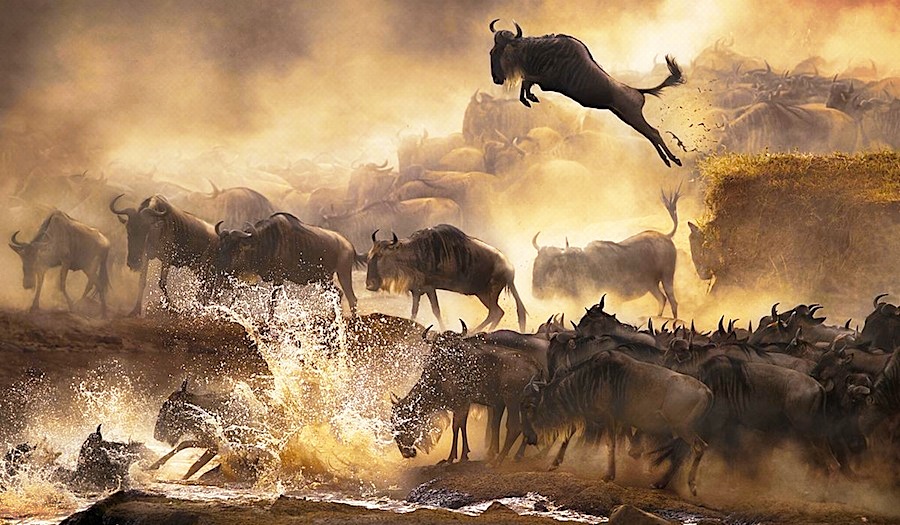
  • The best time to get a chance of seeing the river crossings is June and July (Grumeti River), and August to October (Mara River).
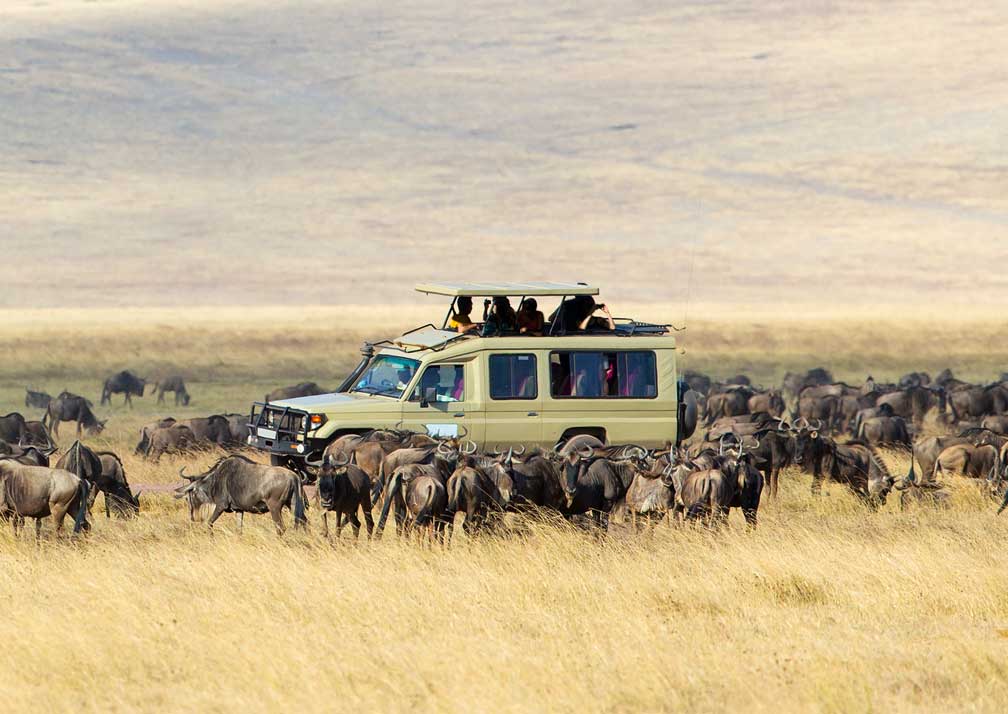
  • June and July are the best times to view wildlife in the Western Corridor. August and September are the best times to see them in the Northern Serengeti region. The grasses are shorter and the animals are easier to spot. The dry season also increases the chance of seeing more animals congregating around waterholes and rivers to drink.
  • There are fewer mosquitoes in the dry season, which many families prefer. Malaria transmission does not stop, however: the US CDC recommends prevention for travelers to this part of Tanzania year-round, so take the prophylaxis your clinician prescribes whichever month you travel.
  • Although it’s dry, at this time of year temperatures can be extreme. Early mornings and nights can get very cold, whereas it can be extremely hot at midday and throughout the afternoon. Ensure you bring warm clothing for early morning safaris, and hats and sunscreen for later on.

Wet Season (November to May)

  • The rains from November to March tend to be sporadic and are usually just a short storm in the late afternoon, so unlikely to affect your enjoyment. In fact, a lightning storm over the Serengeti only enhances your overall experience.
  • In January and February, you can enjoy the Southern Plains bursting with color as the lush green grasses and wildflowers transform the landscape into calm and tranquil grazing land.
  • February is the best month to come if you want to witness the births taking place on the Southern Plains. The vulnerable newborns also attract predators, so you’ll get the opportunity to see lions in action.
  • The wet season offers the chance to view huge varieties of native and migratory birds. It’s an ideal time for birdwatching, especially around the water holes.
  • March and April are the wettest months. Viewing wildlife is hampered by the heavy rains that also make some of the tracks and roads impassable. There’s also a higher risk of malaria in this period, as there are more mosquitoes at this time of year. It’s the least popular time of year to visit the Serengeti.

For a great safari planning to Serengeti National Park, combined with other parks, kindly get in touch with Enclose Africa Safaris, for a great safari planning and tailoring based on your travel interest and budget.

Safaris that go here

Trips that visit Serengeti National Park

Every itinerary is private and tailor-made. These are starting points we can shape around you.
Good to know

Planning a trip to Serengeti National Park

When is the best time to visit Serengeti National Park?
It depends on which part of the migration you want. The southern plains around Ndutu hold the calving season from roughly January to March. The Mara River crossings in the north usually run July to October. June through October is the reliable dry-season window for general game viewing anywhere in the park.
How many days do you need for Serengeti National Park?
Most safaris that include Serengeti National Park run between 7 and 16 days, depending on how many parks you pair it with. Every itinerary is private and tailor-made.
How much does a safari to Serengeti National Park cost?
Private, guided safaris that include Serengeti National Park start from around $3,582 per person. The final price depends on your travel dates, choice of lodges, and group size, and we quote every itinerary individually.
How do I get to Serengeti National Park?
Fly into Kilimanjaro International Airport (JRO) near Arusha, Tanzania. From there it is either a full day on the road through Ngorongoro, or a short light-aircraft hop to Seronera, Kogatende, or the airstrip nearest your camp. Your guide meets you either way. Your Enclose Africa Safaris guide handles every transfer from arrival to departure.

Plan your trip to Serengeti National Park

Tell us your dates and what you would love to see. A real person from our Arusha, Tanzania office replies within one business day with a tailor-made itinerary, no obligation.