
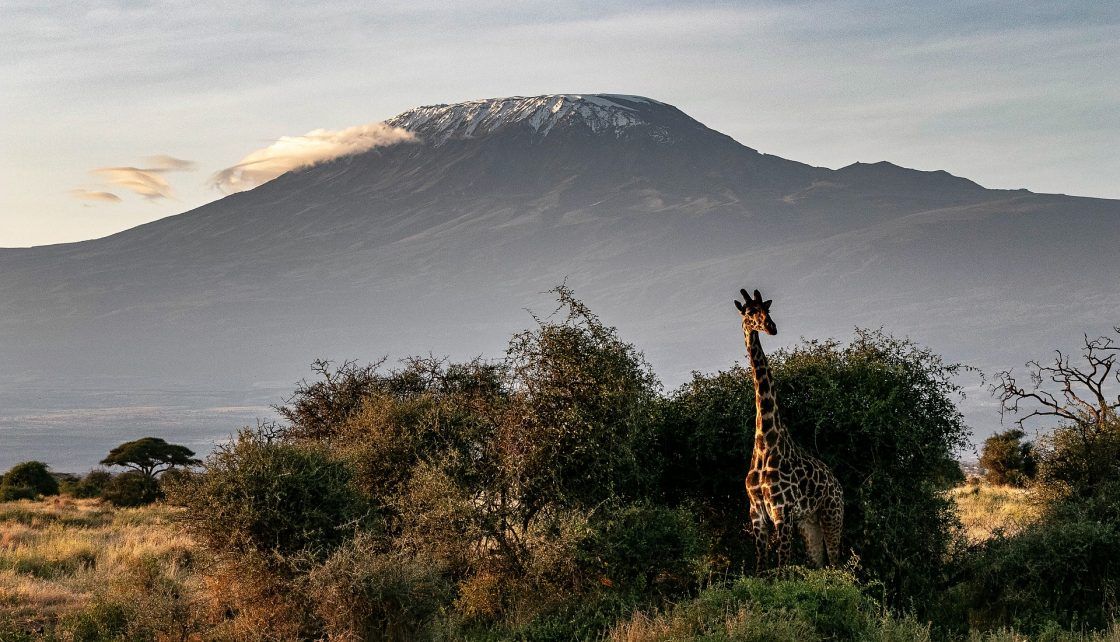
6 Days Marangu Route Kilimanjaro Climb
Request a quote View →
PPF Olorien Business Centre, Njiro, Arusha +255 765 772 906 WhatsApp info@encloseafricasafaris.com
5.0/5 on Tripadvisor and Google Licensed Tanzania Tour Operator
Tanzania
The Marangu Route is the oldest and most established way up Kilimanjaro, and the only route where you sleep in huts rather than tents. Mandara, Horombo, and Kibo Huts offer bunks, mattresses, and communal dining halls, which is why Marangu has long carried the nickname of the Coca-Cola route: it is the classic, comfortable way to Climb Mount Kilimanjaro. The gradient is gentler than the western routes, and ascent and descent follow the same well-graded trail.
This 5-day version is the most direct Marangu itinerary. Five days on the mountain means a fast ascent profile, so it suits trekkers who are fit, acclimatize well, or have recent time at altitude. The built-in acclimatization walk above Horombo Hut helps, but climbers who want an extra adaptation day should consider the 6-day Marangu itinerary instead, which adds a full acclimatization day at Horombo.
The package is gate to gate plus everything around it: pickup at Kilimanjaro International Airport, a hotel night in Moshi, Tanzania with a pre-climb briefing the evening before you start, full support from a professional guide, cook, and porter team on the mountain, and a second Moshi hotel night to recover after your descent.
Your guide and mountain crew collect you from your hotel in the morning for the drive to Marangu Gate, where climbing permits are issued and you sign in with Kilimanjaro National Park. The first stage climbs steadily through montane rainforest, and your guide points out the birds, monkeys, and plant life that thrive in this zone. From day one the crew coaches you on altitude habits: skip alcohol and caffeine, drink more than 4 liters of water a day, and talk to your doctor beforehand about whether Diamox makes sense for you. By late afternoon you reach Mandara Hut, your first night on the mountain, where dinner is served in the communal dining hall. Elevation: 1,900 m to 2,720 m. Distance: 11 km. Hiking time: 5 to 7 hours.
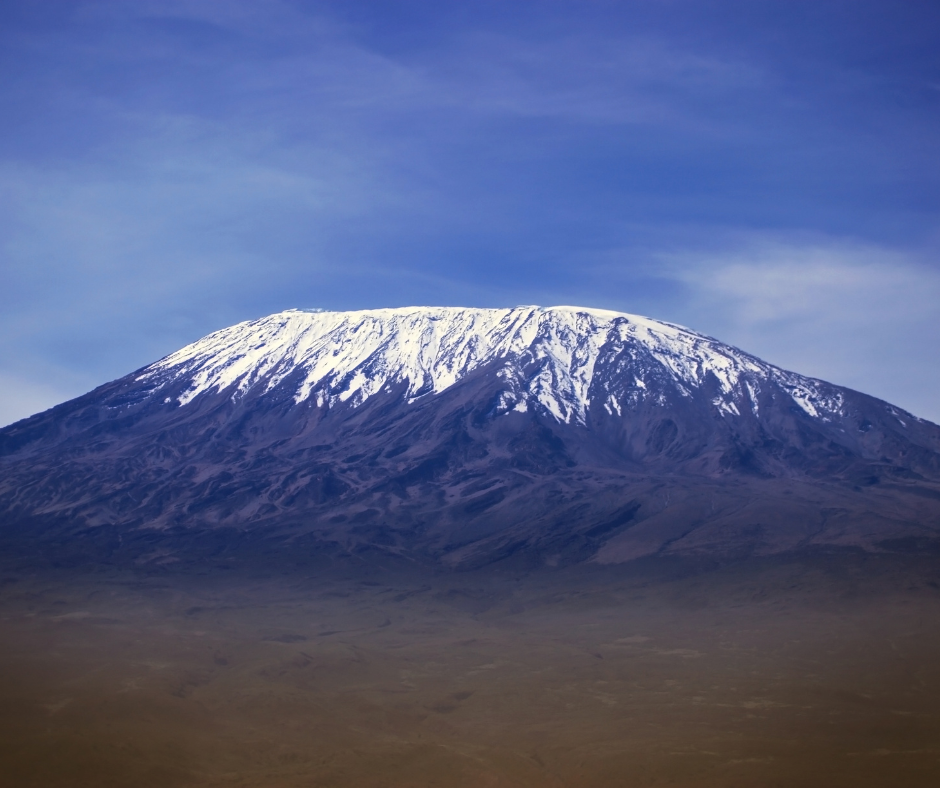
An early breakfast sets up the longest walking day of the lower mountain. The trail soon leaves the forest for open moorland, and on a clear morning both the snowcapped dome of Kibo and the jagged Mawenzi peak come into view. Along the way your guide introduces the strange high-altitude flora of this zone, including giant groundsels and lobelias. After settling in at Horombo Hut you head back out for a short acclimatization hike, a gentle climb and return that helps your body adjust and improves your summit chances. Elevation: 2,720 m to 3,720 m. Distance: 11 km. Hiking time: about 6 hours. Acclimatization hike: 2.5 km, 1 to 2 hours.
After breakfast the route crosses the alpine desert of the Saddle, the broad, windswept plateau between Mawenzi and Kibo. The gradient stays manageable, but the thinning air makes a slow, steady pace essential so you arrive with strength in reserve. Kibo Hut sits at the base of the summit cone, and the afternoon here is deliberately quiet: eat, hydrate heavily, sort your summit layers, and get to sleep as early as you can, because the wake-up call comes before midnight. Elevation: 3,720 m to 4,700 m. Distance: 10 km. Hiking time: 4 to 8 hours.
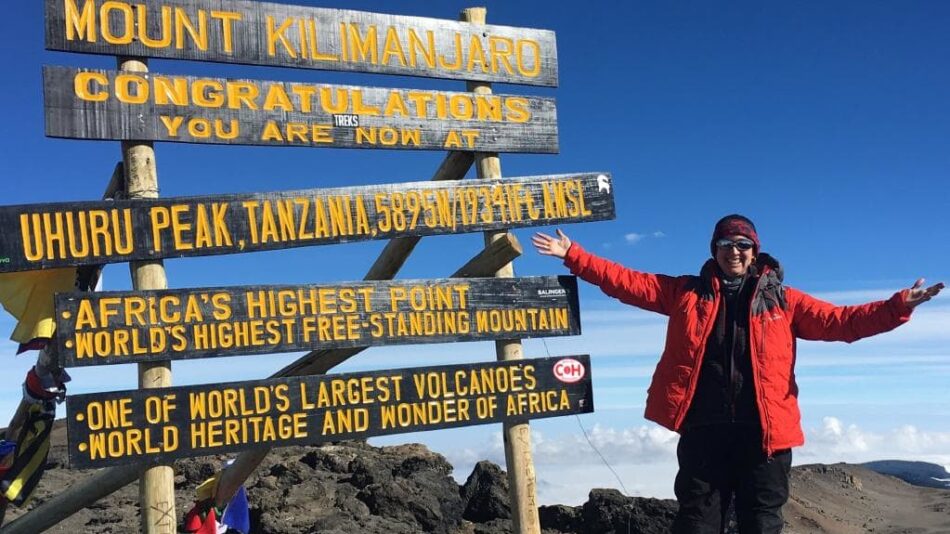
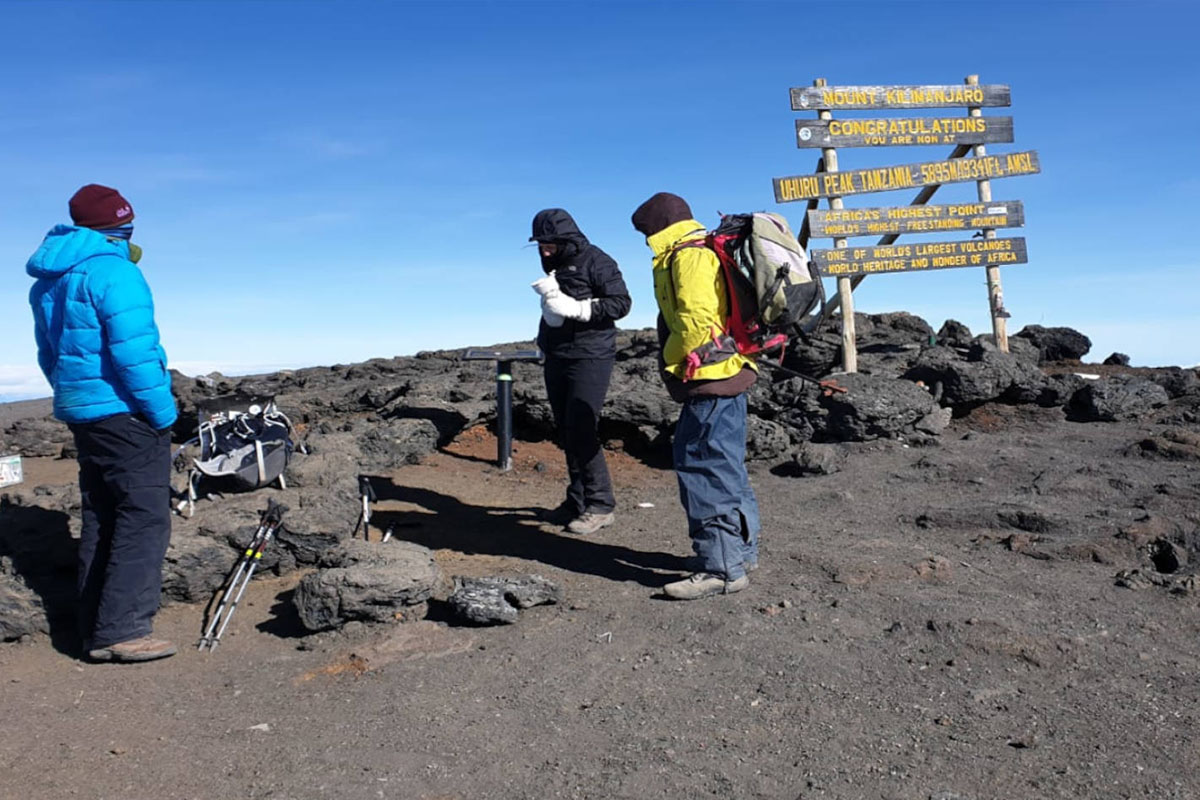
The summit push starts in darkness, climbing the scree switchbacks of the crater rim by headlamp. Every pair of climbers has a dedicated guide watching pace, stamina, and signs of altitude trouble the whole way up. Sunrise usually finds you near the rim, and from there a final push along the crater edge brings you to Uhuru Peak at 5,895 m, the highest point in Africa. The descent demands as much focus as the climb: guides stress that 90 percent of all accidents happen on the way down, so you keep the pace controlled all the way back past Kibo Hut and down to Horombo Hut for a well-earned night's sleep. Elevation: 4,700 m to 5,895 m to 3,720 m. Distance: 16 km. Hiking time: 9 to 12 hours.
A warm breakfast fuels the long final descent, retracing the moorland and rainforest back to Marangu Gate. The drop in altitude brings thicker air and easier walking, and the mood in the group is celebratory. At the gate you sign out of the park, the team gathers to congratulate you, and successful summiteers receive their commemorative certificates at the park office. Your driver then transfers you back to your hotel in Moshi for a shower and a proper bed. Elevation: 3,720 m to 1,900 m. Distance: 18 km. Hiking time: 5 to 6 hours.
Uhuru Peak is 5,895 m. Almost everyone feels the altitude, and acute mountain sickness is common on Kilimanjaro, including on well-paced routes. Acclimatization varies from person to person and is never something you finish; a longer route improves your odds, it does not remove the risk.
Tell your guide about every symptom. Headache, nausea, dizziness, breathlessness at rest, loss of coordination, or confusion all matter, and they matter more at night. Guides carry a pulse oximeter and check you daily.
Descent is the treatment. If symptoms worsen, going down is not a failed summit attempt, it is the correct response, and your guide's call to descend is final. Every climb is escorted by guides trained to make that decision.
See a travel clinician before you book, especially about acetazolamide and any existing heart or lung condition. Nothing on this page is medical advice. For current guidance, read the US CDC on high-altitude travel and altitude illness. Reviewed 24 August 2026.
Read our travel guides to the places this itinerary visits.
Every itinerary is private and fully customizable. Use these as a starting point.
Tell us your dates and what you would love to see. The Enclose Africa Safaris team replies within one business day with your personal itinerary proposal, no obligation.